

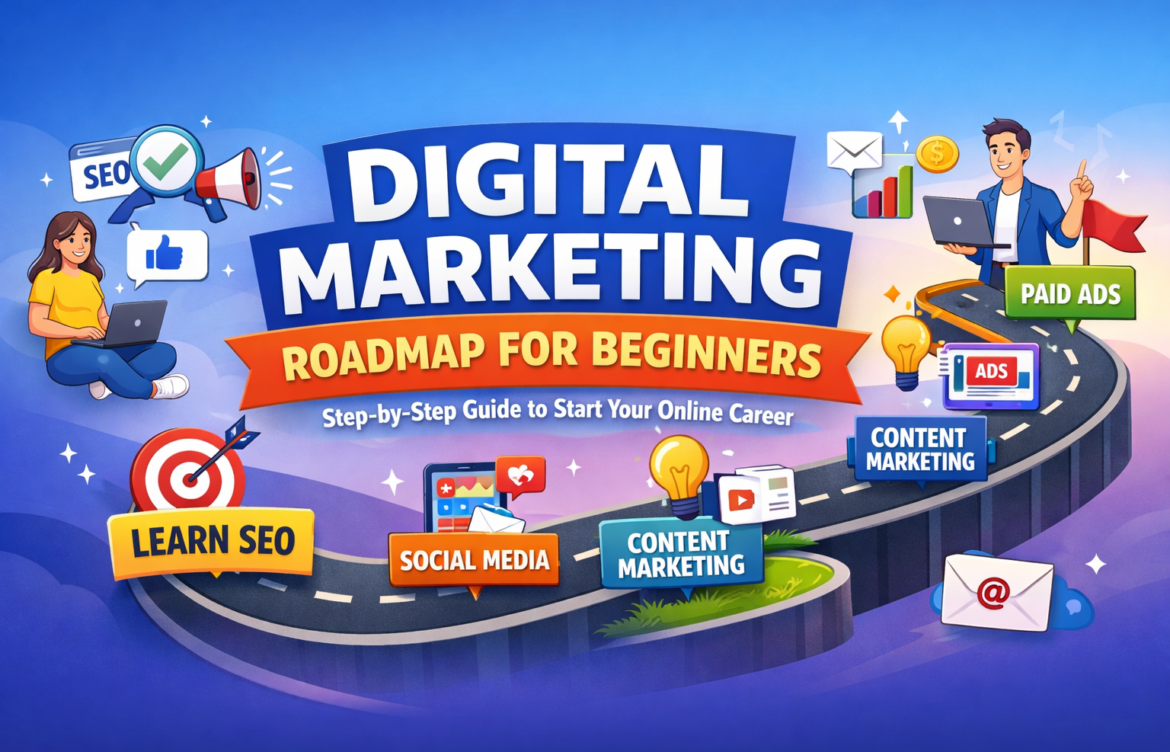
Digital Marketing Roadmap for Beginners
Why You Need a Digital Marketing Roadmap
Digital marketing is one of the most in-demand skills today. Businesses are moving online faster than ever, and they need people who understand how to attract, engage, and convert customers digitally.
But here’s the problem—most beginners feel lost.
With so many options like SEO, social media marketing, content creation, and paid ads, it’s easy to get confused about where to start.
That’s why having a clear digital marketing roadmap is important. It helps you focus, learn step by step, and build real skills without feeling overwhelmed.
What is Digital Marketing?
Digital marketing is the process of promoting products or services using online platforms such as:
- Search engines (Google)
- Social media (Instagram, Facebook, LinkedIn)
- Websites and blogs
- Email marketing
- Online advertisements
Unlike traditional marketing, digital marketing allows you to track results, target specific audiences, and optimize performance easily.
Step 1: Understand the Basics of Marketing
Before learning tools, you need to understand how marketing actually works.
At its core, marketing is about:
- Identifying customer problems
- Offering solutions
- Creating value
People don’t just buy products—they buy outcomes.
For example, someone buying a fitness program is not buying exercises; they are buying better health and confidence.
Understanding this mindset will make every digital strategy more effective.
Step 2: Learn the Digital Marketing Funnel

Every digital marketing strategy follows a simple funnel:
Awareness
People discover your content through search engines or social media.
Interest
They explore your content and learn more about your offering.
Decision
They compare options and build trust.
Action
They take action—buy, subscribe, or contact you.
Your goal is to guide users through each stage instead of trying to sell immediately.
Step 3: Choose One Core Skill to Start
One of the biggest mistakes beginners make is trying to learn everything at once.
Instead, start with one skill:
- SEO (Search Engine Optimization) – Best for long-term traffic
- Social Media Marketing – Best for creativity and engagement
- Paid Advertising – Best for quick results and scaling
Mastering one skill first helps you build confidence and a strong foundation.
Step 4: Learn SEO (Search Engine Optimization)
SEO is one of the most powerful digital marketing skills because it generates free traffic.
Focus on these basics:
- Keyword research (what people are searching)
- On-page SEO (titles, headings, structure)
- Content quality (useful and easy-to-read content)
- Website performance (fast and mobile-friendly)
For example, if someone searches “best budget smartphones,” your blog can rank if it is optimized properly.
SEO takes time, but it delivers long-term results.
Step 5: Build Your Own Platform
To truly learn digital marketing, you need hands-on experience.
You can start with:
- A blog website
- An Instagram page
- A YouTube channel
This helps you:
- Apply what you learn
- Experiment with strategies
- Build a portfolio
Even a simple platform is enough to begin. The goal is practice, not perfection.
Step 6: Learn Social Media Marketing
Social media is one of the fastest ways to reach an audience.

To grow effectively:
- Post consistently
- Create valuable content
- Use strong hooks to grab attention
- Follow trends while adding your own value
Content that performs well includes:
- Tips and tutorials
- Short videos (reels)
- Problem-solving posts
Consistency and creativity are key to success here.
Step 7: Focus on Content Marketing
Content is the backbone of digital marketing.
Without content, you cannot attract or engage users.
Good content should:
- Solve a real problem
- Be simple and clear
- Provide value
A simple formula:
Hook → Value → Call-to-Action
Whether it’s blogs, videos, or social posts, content builds trust and drives results.
Step 8: Explore Paid Advertising
Once you understand organic methods, you can move to paid ads.
Popular platforms include:
- Google Ads
- Facebook Ads
- Instagram Ads
Paid advertising helps you:
- Reach a targeted audience
- Generate quick results
- Scale your efforts
Start with a small budget and focus on learning how ads perform before increasing your investment.
Step 9: Use Email Marketing for Long-Term Growth
Email marketing is one of the most effective ways to build relationships.
It allows you to:
- Stay connected with your audience
- Share valuable updates
- Promote products directly
A simple strategy:
- Offer a free resource (ebook, checklist)
- Collect emails
- Send useful content regularly
Your email list becomes a long-term asset that you control.
Step 10: Track Performance and Optimize
Digital marketing is data-driven.
You should regularly track:
- Website traffic
- Engagement rates
- Conversion rates
- User behavior
This helps you understand what is working and what needs improvement.
Success in digital marketing comes from:
Testing → Analyzing → Improving
Final Thoughts: Start Small, Stay Consistent
Digital marketing is not about quick success—it’s about consistent growth.
Start with the basics, focus on one skill, and build your own platform. Over time, your knowledge and confidence will grow.
Remember, the key to success is not just learning—it’s taking action.