

180-Million-Year-Old “Dolphin-Like” Predator Fossil Reveals Secrets of Jurassic Survival
The ancient oceans of Earth were once home to some of the most fascinating and powerful creatures ever to exist. Among them was a sleek, fast-swimming predator that looked surprisingly like a modern dolphin—but was, in fact, a reptile. A recent fossil discovery in Germany has brought this incredible animal back into the spotlight, offering new insights into how life thrived—and adapted—during the age of dinosaurs.
Meet the Ancient Ocean Giant
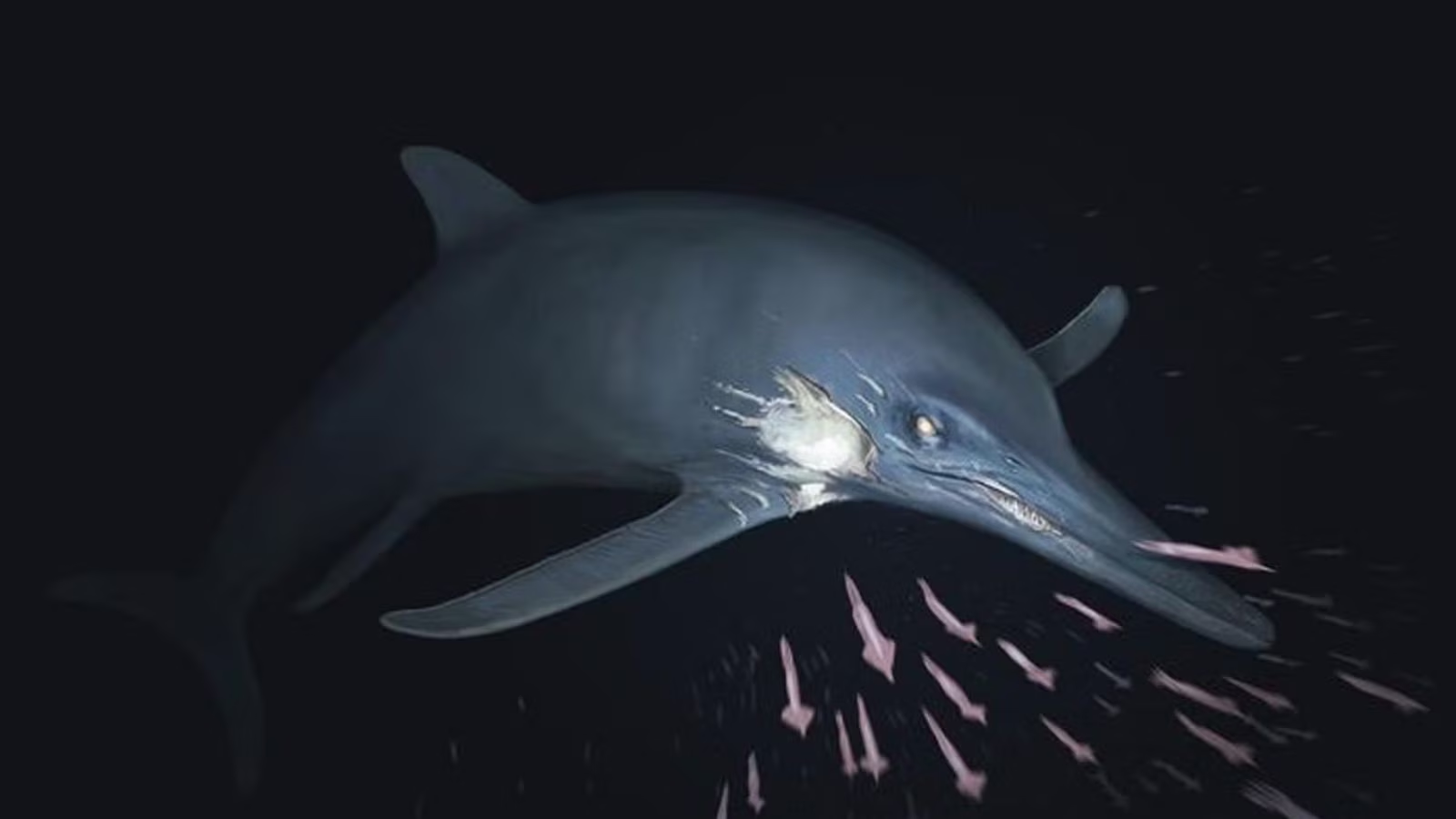
The fossil belongs to an ichthyosaur, a group of marine reptiles that lived during the time of the dinosaurs. Specifically, this specimen is part of the genus Temnodontosaurus, one of the largest and most formidable predators of its era. Reaching lengths of over 20 feet (around 6.5 meters), this creature ruled the seas during the early part of the Jurassic Period.
Ichthyosaurs like Temnodontosaurus had streamlined bodies, powerful tails, and elongated snouts filled with sharp teeth—features that made them efficient hunters. Their resemblance to modern dolphins is a classic example of convergent evolution, where unrelated species develop similar traits due to living in comparable environments.
A Remarkable Discovery in Germany
The fossil was unearthed at the Mistelgau clay pit near Bayreuth, a region already known for its rich deposits of prehistoric marine life. Over the years, this site has yielded numerous fossils that help scientists reconstruct the ancient ecosystems of the Jurassic seas.
This particular find includes several important skeletal parts: fragments of the skull and lower jaw, parts of the shoulder girdle, forefins, sections of the spine, and more than 100 teeth. While the skeleton is incomplete, it provides enough detail to better understand the anatomy and lifestyle of this ancient predator.
What makes this discovery especially significant is its age. It is considered one of the youngest known examples of Temnodontosaurus, suggesting that these massive reptiles survived longer than previously believed in certain regions.
Evidence of a Tough Life
One of the most fascinating aspects of this fossil is the clear evidence of injuries. Scientists observed damage in key areas of the skeleton, particularly around the shoulder and jaw joints. These injuries were not minor—they likely had a serious impact on the animal’s ability to hunt and feed.
Imagine a top predator struggling with limited mobility or difficulty opening its jaws. For an animal that relied on speed and precision to catch prey, such injuries could have been life-threatening.
Yet, this individual survived.
Signs of Adaptation and Resilience
The fossil reveals clues about how the injured ichthyosaur managed to cope. Its teeth show heavy wear, suggesting that it may have shifted its diet to softer or easier-to-catch prey. Instead of chasing fast-moving fish or squid, it might have relied on slower organisms or scavenged when possible.
Even more intriguing is the presence of gastroliths—small stones found in the abdominal region. These stones are known to help with digestion by grinding food inside the stomach. While gastroliths are common in some prehistoric animals, they are extremely rare in ichthyosaurs.
Their presence in this specimen suggests a clever adaptation. Unable to hunt effectively due to its injuries, the animal may have relied on these stones to process tougher food that it could still manage to eat.
A Window into Jurassic Marine Life
This discovery offers more than just a glimpse into the life of a single animal—it provides valuable insights into the broader ecosystem of the Jurassic seas.
The Mesozoic Era, often called the “Age of Reptiles,” was a time of incredible biodiversity. Marine environments were filled with a variety of predators and prey, all competing for survival. Finds like this help scientists understand how these ecosystems functioned and how species adapted to challenges.
The injured Temnodontosaurus shows that even top predators were not immune to hardship. It also highlights the importance of adaptability in survival—a lesson that applies across millions of years of evolution.
Why This Discovery Matters
Fossils are more than just remnants of the past; they are stories written in stone. Each bone, tooth, and fragment tells us something about how ancient creatures lived, interacted, and survived.
This particular fossil stands out because it captures a moment of struggle and resilience. It challenges the idea that only the strongest and healthiest animals survived in prehistoric times. Instead, it shows that adaptability and behavioral changes could make the difference between life and death.
Moreover, the discovery extends our understanding of the timeline of Temnodontosaurus, suggesting that these creatures were more resilient and long-lasting than previously thought.
Ongoing Research and Future Discoveries
The Mistelgau site continues to be an important location for paleontological research. Scientists are still studying the fossils found there, analyzing tooth wear patterns, bone structures, and other details to piece together the lives of these ancient animals.
As new discoveries are made, our understanding of the Jurassic oceans will continue to evolve. Each fossil adds another piece to the puzzle, helping us reconstruct a world that existed long before humans walked the Earth.
Final Thoughts
The story of this injured yet resilient ichthyosaur is a powerful reminder of nature’s ability to adapt and endure. Despite severe physical challenges, this ancient predator found a way to survive in a competitive and often unforgiving environment.
In many ways, it mirrors the struggles faced by living creatures today. Survival is not always about being the strongest—it’s about being able to adapt, change, and persist.
As scientists continue to uncover the secrets of the past, discoveries like this not only deepen our knowledge of ancient life but also inspire a greater appreciation for the resilience of life itself.
- No Comments
- April 30, 2026