

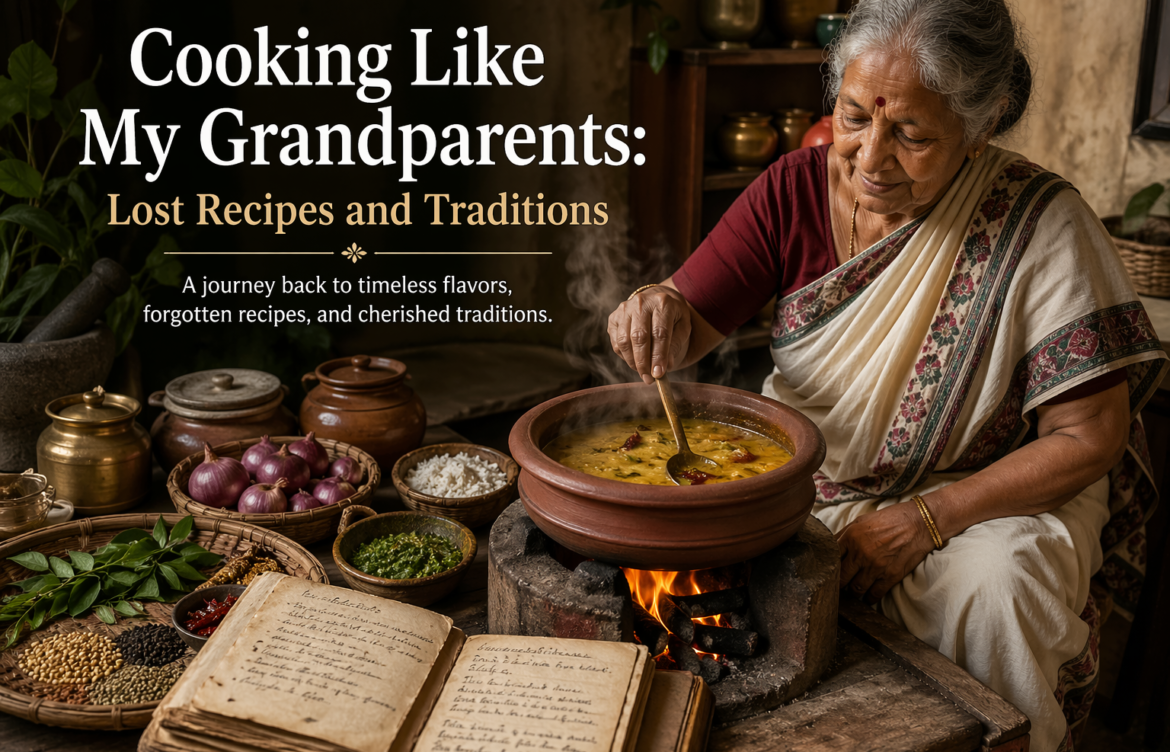
Cooking Like My Grandma: Traditional Cooking Methods
Food is more than just something we eat to survive—it is memory, identity, and history served on a plate. In many homes, especially in older generations, cooking was never rushed or mechanical. It was a slow, meaningful process where every ingredient had a purpose and every recipe told a story. Today, as modern lifestyles become faster and convenience-driven, many traditional dishes are quietly disappearing. But these lost recipes still hold deep cultural value and deserve to be remembered and revived.
The Meaning Behind Traditional Cooking
In our grandparents’ kitchens, cooking was not just about taste—it was about connection. Recipes were passed down orally or written in old notebooks, often without exact measurements. A pinch of this, a handful of that, and “cook until it smells right” were common instructions.
Traditional recipes are often considered cultural records because they reflect local ingredients, geography, and history. Researchers note that food traditions preserve cultural identity by passing down knowledge, customs, and community values through generations . In other words, every dish is like a living memory of the people who created it.
Why Lost Recipes Are Disappearing
Many traditional recipes are fading for simple but powerful reasons:
- Urban lifestyles leave less time for slow cooking
- Packaged and fast food replaces home-cooked meals
- Ingredients once grown locally are harder to find
- Younger generations are less exposed to traditional methods
Studies show that modernization and globalization have significantly changed eating habits, often replacing traditional meals with processed food options . As a result, recipes that once defined families and regions are slowly being forgotten.
The Wisdom Hidden in Old Cooking Methods
Our grandparents cooked with what they had, but they also knew how to make the most of it. Nothing was wasted. Every part of an ingredient had value.
Some examples of traditional wisdom include:
- Fermentation for preservation: used in pickles, curd, and sour drinks
- Stone grinding and hand pounding: which preserved nutrition and flavor
- Seasonal cooking: eating foods based on what was naturally available
- Slow cooking over firewood: which enhanced taste and aroma
These methods were not just cultural—they were practical systems developed over generations to survive without modern technology. Even today, food experts recognize that traditional cooking techniques often promote sustainability and nutrition .
Lost Recipes That Tell Stories
Every region has dishes that are now rarely cooked but once formed the heart of daily life. Some were tied to festivals, others to survival during difficult times.
1. Simple Village Lentils
In many rural households, lentils were cooked with wild herbs, garlic, and hand-ground spices. The flavor was earthy and comforting, reflecting the simplicity of village life.
2. Stone-Ground Flatbreads
Before machines, wheat and millet were ground at home. The resulting flour gave breads a distinct texture and richer taste that modern flour often lacks.
3. Fermented Seasonal Dishes
Foods preserved through natural fermentation were common before refrigeration. These dishes carried strong flavors and were often consumed during lean seasons.
4. Herbal Home Remedies in Food
Many recipes doubled as medicine—soups for colds, spice mixtures for digestion, and teas for energy. Food and health were deeply connected.
These recipes were not just meals—they were survival strategies shaped by environment, culture, and necessity.
The Emotional Value of Grandparents’ Cooking
What makes these recipes truly special is not just the taste, but the emotion attached to them.
For many people, the smell of a particular spice or the sound of food cooking on a pan instantly brings back childhood memories—grandparents cooking in clay pots, families eating together on the floor, and festivals filled with homemade sweets.
Food becomes a bridge between generations. It carries love, care, and traditions that cannot be replaced by modern convenience.
The Risk of Losing Culinary Heritage
When traditional recipes disappear, we lose more than food—we lose cultural identity.
Experts in food heritage emphasize that traditional cuisine is deeply tied to community identity and history, acting as a living archive of cultural evolution . Without these recipes, future generations may never fully understand how their ancestors lived, celebrated, or survived.
Bringing Old Recipes Back to Life
The good news is that these traditions are not completely lost. Many families and chefs are now working to revive old recipes.
Here are simple ways to bring them back:
- Ask elders about forgotten dishes and write them down
- Cook traditional meals at least once a week
- Grow or source local ingredients whenever possible
- Share recipes with younger family members
- Celebrate festivals with homemade traditional food
Even small efforts can help preserve a rich culinary heritage.
Blending Tradition with Modern Life
Reviving old recipes does not mean rejecting modern cooking. Instead, it means finding a balance.
For example:
- Using modern appliances while keeping traditional ingredients
- Reducing cooking time but preserving original flavors
- Adapting recipes for healthier lifestyles
Tradition can evolve without disappearing. The key is respect for the original method and understanding its cultural value.
Conclusion
Cooking like our grandparents is not just about food—it is about remembering where we come from. Every traditional recipe carries stories of struggle, celebration, love, and survival. While modern life has changed the way we eat, it has not erased the importance of these culinary traditions.
By reviving lost recipes and respecting old cooking methods, we keep our cultural identity alive. And in doing so, we ensure that future generations will not just eat food—but also taste history.
- No Comments
- April 24, 2026