

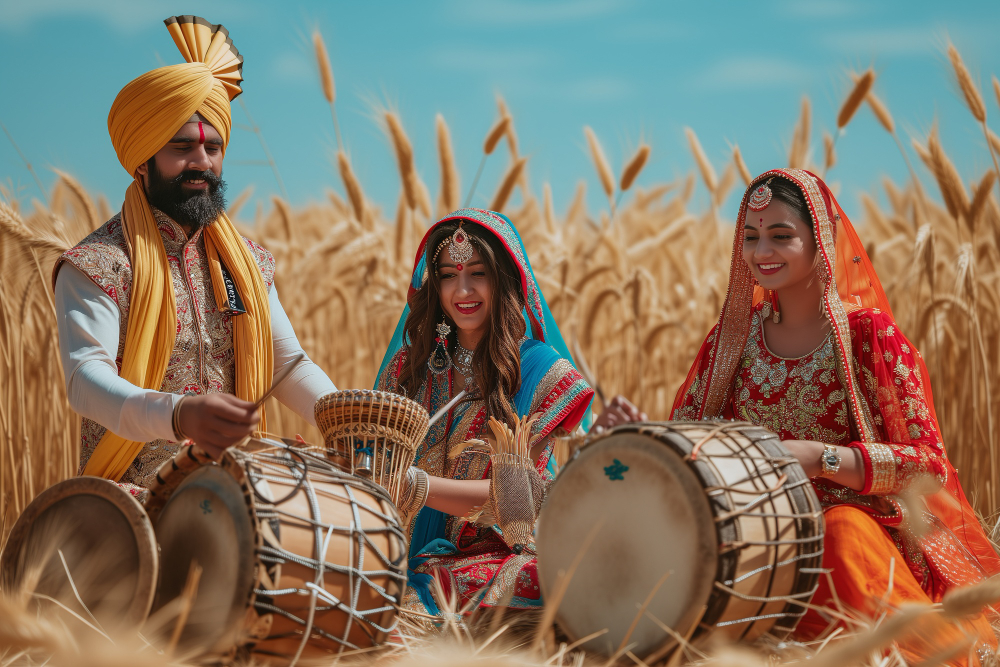
Baisakhi Festival: Meaning, History, and Celebrations
Baisakhi is one of the most important and joyful festivals in India, especially in the northern state of Punjab. Celebrated every year on April 13 or 14, this festival marks the beginning of the harvest season and holds great religious significance for Sikhs. Baisakhi is a time of happiness, gratitude, and togetherness, where people thank nature for a good harvest and celebrate their cultural traditions with great enthusiasm.
What is Baisakhi?
Baisakhi, also known as Vaisakhi, is a harvest festival celebrated mainly in Punjab and northern India. It marks the start of the Sikh New Year and is also deeply connected with the formation of the Khalsa Panth in Sikh history. Farmers celebrate this day with joy as it signals the time to harvest the Rabi crops, especially wheat.
The festival usually falls on April 13 or 14 every year, according to the solar calendar. It is a public holiday in Punjab and is celebrated with great excitement and energy.
Historical Significance of Baisakhi
Baisakhi is not just a harvest festival; it also holds deep historical and religious importance for the Sikh community. On April 13, 1699, the tenth Sikh Guru, Guru Gobind Singh, established the Khalsa Panth at Anandpur Sahib in Punjab.
On this day, Guru Gobind Singh gathered thousands of people and asked for volunteers who were willing to sacrifice their lives for their faith. Five brave men stepped forward and became known as the “Panj Pyare” (the five beloved ones). Guru Gobind Singh baptized them and created the Khalsa, a community of committed Sikhs who follow a strict code of conduct and stand for equality, courage, and justice.
This event is considered one of the most important moments in Sikh history, and Baisakhi is celebrated to remember and honor this occasion.
Agricultural Importance
Baisakhi is also a major harvest festival for farmers in Punjab and nearby regions. During this time, crops like wheat are ready to be harvested. Farmers thank God for a good yield and pray for future prosperity.
The festival marks the end of the hard work of farmers and the beginning of a season of happiness and abundance. It is a time when rural communities come together to celebrate their efforts and enjoy the fruits of their labor.
How is Baisakhi Celebrated?
Baisakhi is celebrated with great enthusiasm, especially in Punjab. The celebrations include religious rituals, cultural performances, fairs, and traditional food.
1. Gurudwara Visits
On Baisakhi, people visit Gurudwaras (Sikh temples) early in the morning. Special prayers and kirtans (devotional songs) are organized. The Guru Granth Sahib, the holy scripture of Sikhs, is read continuously in a ritual known as Akhand Path.
After prayers, people participate in “Langar,” a community meal served to everyone regardless of caste, religion, or background. This reflects the Sikh values of equality and sharing.
2. Nagar Kirtan
One of the main attractions of Baisakhi celebrations is the Nagar Kirtan, a religious procession led by the Panj Pyare. People sing hymns, perform martial arts like Gatka, and spread messages of peace and unity.
The streets are filled with music, colors, and joy as the procession moves through towns and cities.
3. Bhangra and Gidda
No celebration in Punjab is complete without traditional dances. On Baisakhi, men perform Bhangra and women perform Gidda. These energetic dance forms express happiness and excitement.
Dressed in colorful traditional clothes, people dance to the beats of dhol (drum) and celebrate the festival with full energy.
4. Fairs and Festivities
Many villages and towns organize fairs (melas) during Baisakhi. These fairs include games, rides, food stalls, and cultural performances. People of all ages come together to enjoy these activities.
It is a time for families and friends to bond, share meals, and celebrate together.
Traditional Food of Baisakhi
Food is an important part of Baisakhi celebrations. Some popular dishes include:
- Sarson da saag and makki di roti
- Chole bhature
- Lassi (a traditional yogurt-based drink)
- Kheer and jalebi
These dishes reflect the rich culture and flavors of Punjab. Sharing food with others is an important tradition during the festival.
Baisakhi in Different Parts of India
Although Baisakhi is mainly associated with Punjab, similar harvest festivals are celebrated across India:
- In Assam, it is celebrated as Rongali Bihu
- In West Bengal, it is known as Poila Boishakh (Bengali New Year)
- In Kerala, it is celebrated as Vishu
- In Tamil Nadu, it is called Puthandu
Each region celebrates in its own unique way, but the spirit of gratitude and new beginnings remains the same.
Cultural Importance of Baisakhi
Baisakhi represents unity, joy, and gratitude. It brings people together regardless of their background. The festival teaches us to appreciate nature, respect hard work, and celebrate life.
For the Sikh community, it is a day of pride and spiritual importance. For farmers, it is a reward for their efforts. For everyone, it is a time to spread happiness and positivity.
Conclusion
Baisakhi is a beautiful festival that combines culture, religion, and agriculture. It is a time to celebrate hard work, remember history, and enjoy life with loved ones. From Gurudwara prayers to energetic dances and delicious food, every part of Baisakhi reflects joy and togetherness.
Whether you are in Punjab or any other part of the world, celebrating Baisakhi helps you connect with traditions and appreciate the importance of community and gratitude. This festival reminds us that after hard work comes happiness, and every new beginning brings hope.
Happy Baisakhi!
- No Comments
- April 13, 2026